
News and numbers
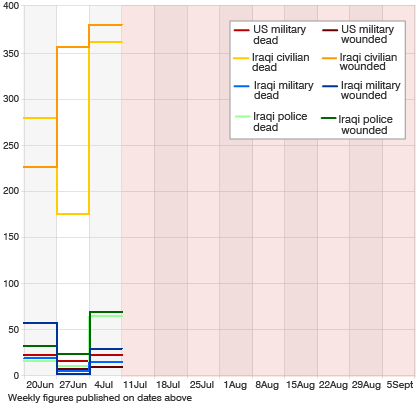
The BBC is monitoring the US-led ‘surge’ in Iraq , offering various indicators of its success or failure including body counts, levels of electricity provision and Iraqi hospitals’ intake of victims. In the report, the body count comes first, including a neat little graph. But, at the risk of sounding callous, is this body count necessarily the primary indicator of the ‘success’ of these military operations? Is a graph a useful way to think about this situation? The BBC does not include in its report what the military’s stated aims and objectives might be. By imposing their own benchmark, the BBC runs the risk of resentment from US or UK militaries, further weakening trust between journalists and military forces.
Posted on Friday, July 13, 2007 at 08:56AM
by
Ben O'Loughlin
|
1 Comment
Share this: del.icio.us | Digg | Google | Reddit | Stumble Upon | Technorati

Reader Comments (1)
In defence of the BBC, the full report did include a few other measures, of which perhaps the most interesting was the amount of time per day individual families had access to electricity. The fact that the family with the least stable supply received 20 minutes per day was quite a remarkable fact and show the extent of the collapse of the Iraqi infrastructure. That said, little context was given about the areas of the city where they lived (there were brief summaries, but no explanation was really offered has to why some areas of Baghdad had more stable supplies than others).
I would also question the value of the stats you mention though. Even if we assume that deaths and injuries per week are a good measure of the surge's success (and I think a pretty good case can be made that they are at least related to it), quoting them in macro-form like this might be deceptive. Elsewhere I have read that one of the outcomes of the surge has been the movement of violence. Areas with soldiers are more stable than they previously have been, but other parts of the country are now even more violent than before.